Fran Lemos: A memory and a springtime drive
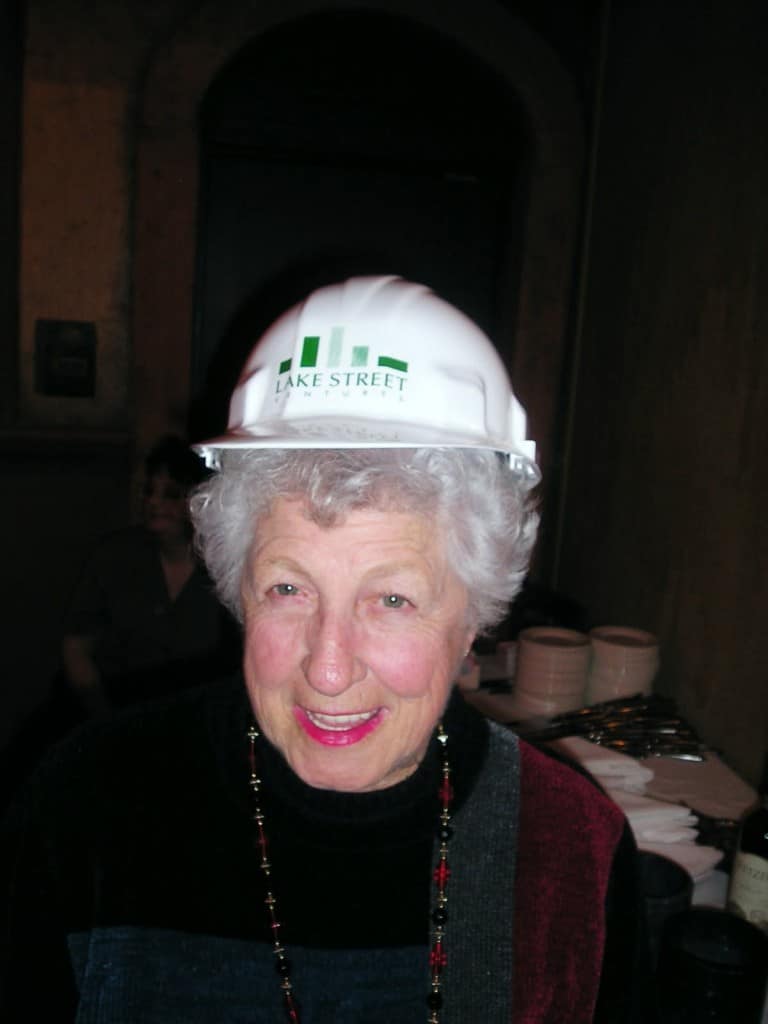
I have been lucky in my life to have met several people who have made me think: Growing old might not be so bad if I can grow old as they have.
One of these is Fran Lemos.
Mrs. Lemos died on Monday, April 20, at the age 96. I only met her a year ago, when she was a mere 95.
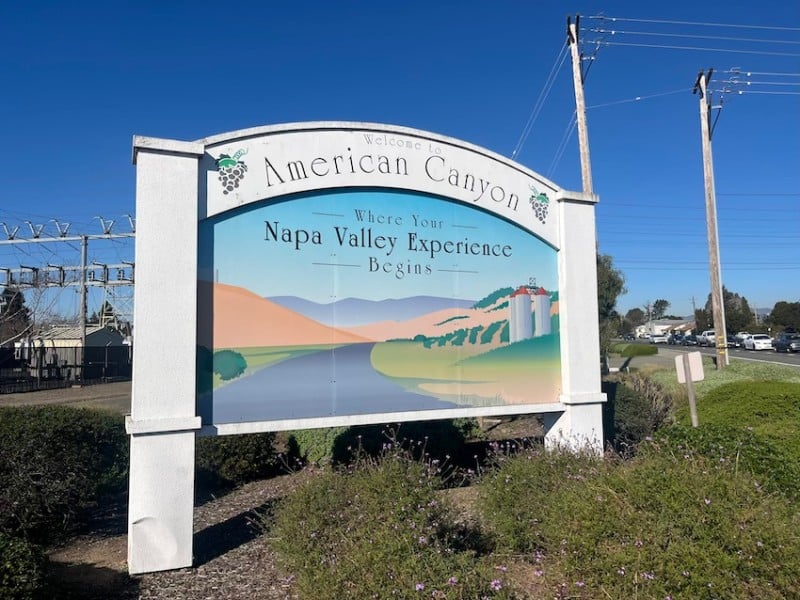
I was part of a group of journalists who had been hearing from residents of American Canyon that they wanted a community newspaper. The fastest growing, most diverse and just possibly the most interesting city in Napa County needed a newspaper.
Another member of the group was Paul Franson, the long-time publisher of Napa Life, a weekly newsletter of upcoming events, and food, wine, arts and business news. He keeps his finger on the pulse of all worth mentioning. He’d been saying for some time: “There is a lot going on in American Canyon.”
Where to begin? We knew too many people only knew the city via the view from Highway 29 as they drove by through on their way north or south. I remembered as a kid growing up in Napa that we thought Palby’s Restaurant was the most wonderful place to go for Sunday lunch. These days, I would make a special trip to American Canyon to go to its Mid City Nursery. I knew its high school had thriving arts programs, stellar singers and actors. But what else?
Joan Bennett, one of American Canyon’s staunchest supporters, told us: “You have to meet Fran Lemos.”
She set up a meeting. “She will give you a tour,” Joan explained.
So, on a Sunday, Paul Franson and I drove from Napa to Joan’s house to meet a diminutive, spunky lady, Fran Lemos.
She was going to introduce us to her city. “OK, let’s go,” she said.
I drove. Fran sat in the front passenger seat. Paul and Joan sat in the back. For more than three hours, we explored American Canyon, as Fran told us the story of the city where she had lived her entire adult life, beginning before it was called American Canyon (1992) going back to when it was Napa Junction, seemingly just a crossroad, but not in her view.
She had grown up in Vallejo, she told us, but married and settled in the community just north of it. In 1947, she married a man from Napa Junction, whose parents, as a wedding gift, gave the newlyweds some land. Her husband, her father and other relatives built her house, the white stucco bungalow she would live in the rest of her life, where she would raise her four children.
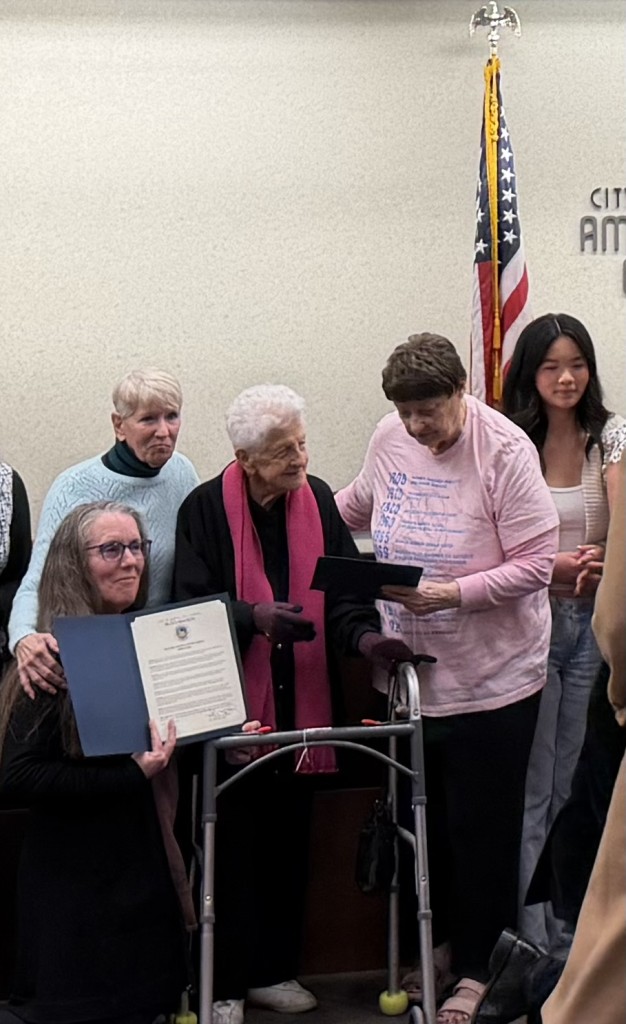
“Turn left,” she said, as we drove. “Turn right here.” She knew every road of her city, every corner, and hundreds of stories about them. She told us who lived there, who had lived there. She told us about the schools, the controversies, and about the often snooty attitude of those living north of her city who didn’t know it at all.
She took us off Highway 29, from the dramatic wetlands in the west to the new developments on the eastern hills. We made a long drive out Green Island Road to the land’s end.
We circled back through the warehouses, many of which had been built on land her family had owned.
What we also saw throughout the journey was her pride in the city she had helped build, and her deep enduring love of it. One stop was the street named in her honor.
“I will never look at American Canyon the same way,” Paul Franson said.
The drive concluded at her house. She insisted on giving me two of the many plants she was growing in her yard, although I told her I was a challenged gardener. “Take them,” she said, handing me a succulent and a geranium. “They are hard to kill.”
I saw her again at city council meetings that spring. I learned there was a special seat in the chambers with her name on it. I felt honored to be invited to her 96th birthday party in July, a joyful occasion at her house, the grounds filled with family and many, many friends.
July was also the month we launched The American Canyon Current. We were starting small, I told her, with two interns from UC Berkeley working on a weekly newsletter. I also told her the plants she had given me were, remarkably, still alive and thriving.
“Keep it up,” she said. “Keep it up.”
She leaves a legacy of devotion to her family and to the city she helped create. And I can only hope to live as she did, telling stories as she did on that spring afternoon driving every road in American Canyon.