With bee population down, American Canyon beekeeper wants people to think local
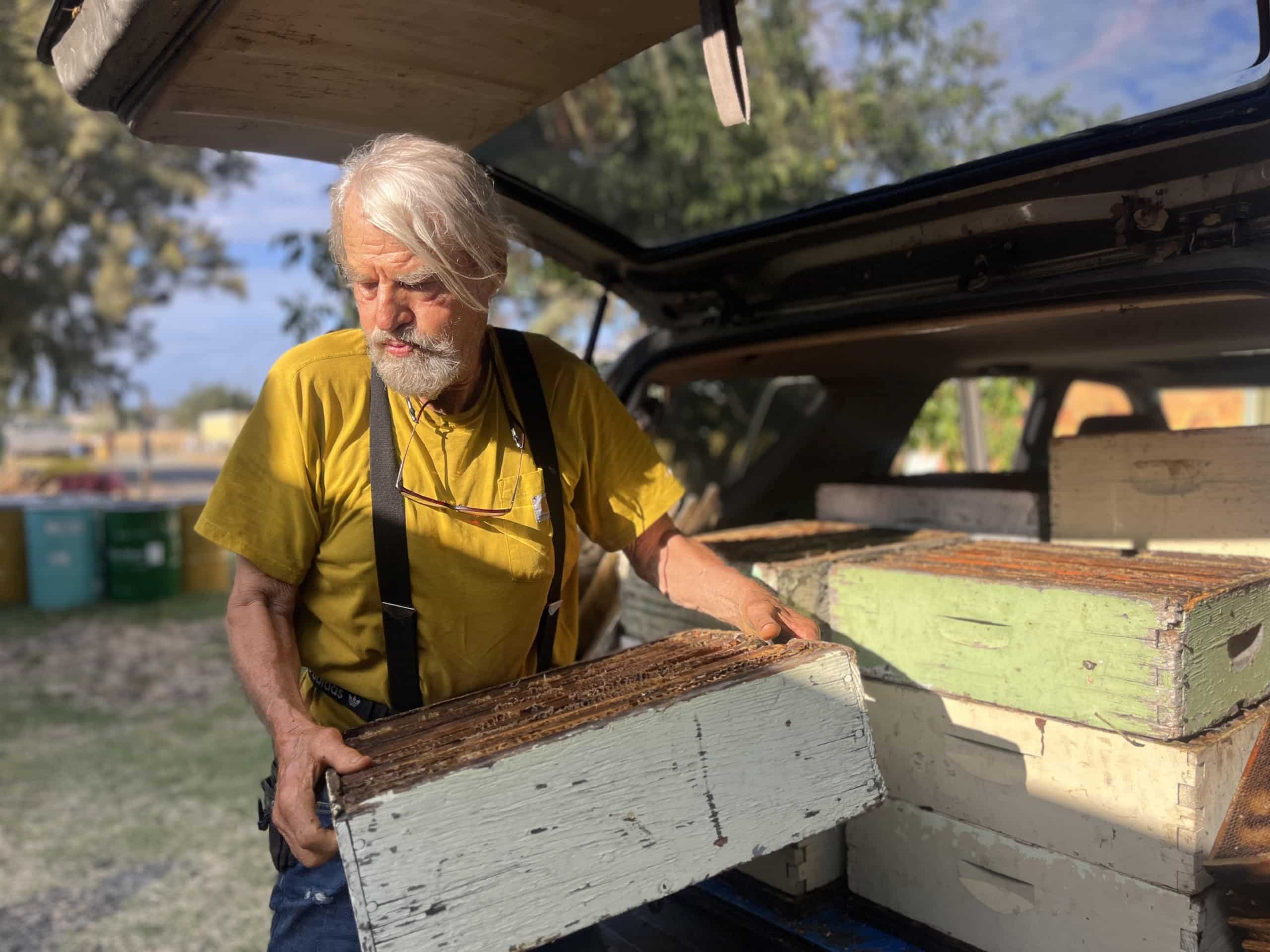
Even after 50 years, Spencer Marshall says he’s living his dream.
Marshall and his late wife, Helene, founded Marshall’s Farm Honey in American Canyon in 1992. It’s a small, feral utopia on the west side of Highway 29, a compound of red and yellow shacks where the air is thick with bees.
Since its founding, the farm has gained Bay Area fame. You can find Marshall’s Honey at farmer’s markets, on the shelves of big box and small grocery stores and drizzled on dessert plates at some of Bay’s most celebrated restaurants.
When the American Canyon Current caught up with Marshall last Friday, he was bringing in the day’s yield via stacks of honey-laden wood drawers from some 200 hives all around the Bay Area, each one a home for upwards of 50,000 bees.
While the American Canyon farm is where honey comes in to be bottled and distributed, the hives are scattered around 16 different spots, spanning from secluded trees in west Marin to a rooftop garden at The Fairmont Hotel in San Francisco, which Marshall says has the most productive hives.
In each location, bees feed on whatever flowers and trees are nearby, making for distinct flavors. “Every couple miles, you get a totally different honey,” said Marshall.
“Honey is really powerful. It has everything the body needs,” Marshall said. Still spry at 82 years, he might know what he’s talking about.
“The secret to life is doing something you really enjoy doing,” he said. “Something that makes you want to get out of bed in the morning.”
It might be a value he learned from the bees themselves. “They’re totally purposeful,” Marshall said, watching the insects buzz. “Everything is for the hive. For the survival of the hive. To make the hive stronger.”
“It would be great if this country knew that,” he added, pulling out a pocketknife to slice off a chunk of propolis, a nutrient-dense wax that coats each beehive. Marshall shared pieces with onlookers.
According to Marshall, bees are a solid indicator of what’s going on in the world. When their population fluctuates, it means something’s up. And these days, he said, something is definitely up.
Not only do bees produce a nutrient-rich food, Marshall said, they are essential pollinators for growing crops. “Without bees, we’d be up s— creek.”
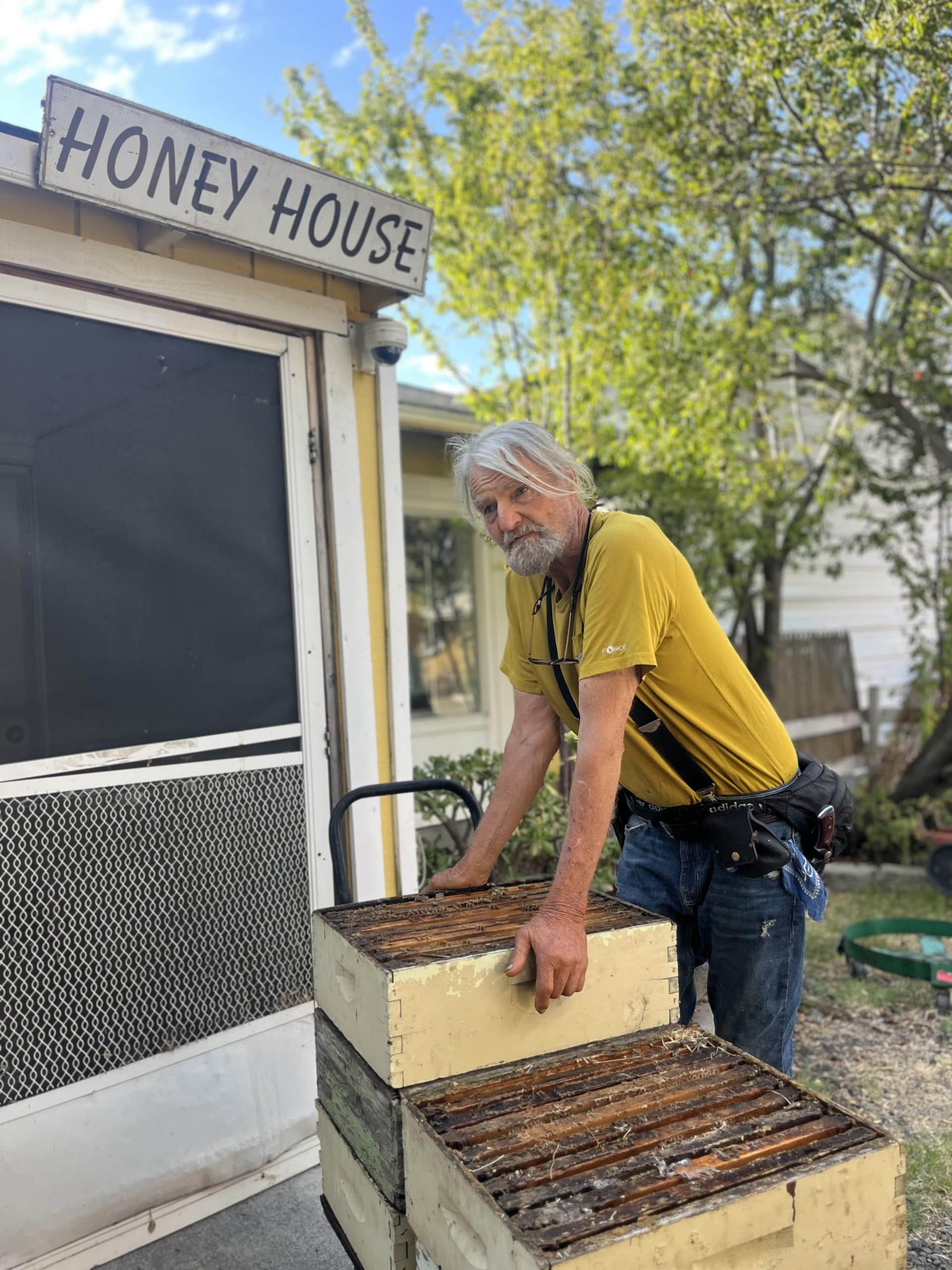
But since Helene’s passing, Marshall has scaled back operations because of two things: a tighter budget and climate change, which has led to about half the yield the farm had in the ‘90s.
“Those days are gone,” said Marshall. “Keeping the bees alive now is a struggle in itself.” Now, he said, queens don’t have the life expectancy they used to, and honey production has faltered.
Marshall recently had to relocate hives from Cutting Wharf, just north of American Canyon. Higher wind levels in the last couple years make it harder for bees to fly, rendering many unable to harvest pollen and reproduce. On top of that, conditions are dryer than they used to be, which means fewer flowers to pollinate.
A major concern for Marshall is pesticide use. “It’s a struggle to keep bees alive where they’re doing a lot of farming and spraying,” said Marshall. “I’m now trying to find the wildest places I can for hives.”
For Marshall, coming together as a community is the best option when faced with worsening conditions. He’s thinking big: “American Canyon needs a farmer’s market,” he told the Current.
“I want to start going to city council meetings and getting something going. I want the word out that I’m available; that my space is available.”
Since last year, Marshall has spent every Saturday from 10 a.m. to 2 p.m. as a one-man market in the parking lot of Tractor Supply, on the eastern side of Highway 29.
“I thought I would get the action going,” he said, to show that it’s possible. “There’s still not a lot of customers, but I’m there!” he said.
Marshall pointed out that grocery options for American Canyon residents are limited. There’s a Circle K and a Safeway, but healthy, local fare is nearly impossible to come by. And, he said, there doesn’t seem to be a city plan to change that.
So, it seems we could learn a thing or two from the bees. “They’ve been alive for hundreds of millions of years,” said Marshall. “They know what they’re doing.”