Divisive Watson Ranch initiative gathers 2,200 signatures
A measure to give landlocked Watson Ranch direct access to Highway 29 could advance to the November ballot after approximately 2,200 signatures supporting the initiative were delivered to City Hall on May 18, according to City Manager Jason Holley.
“I think we’re going to be in great shape,” said developer Terrence “Terry” McGrath, who crafted the initiative, called Measure M, to connect Watson Ranch, where 1,250 houses are planned, to Highway 29, which sees over 45,000 commuters every day to and from Napa Valley.
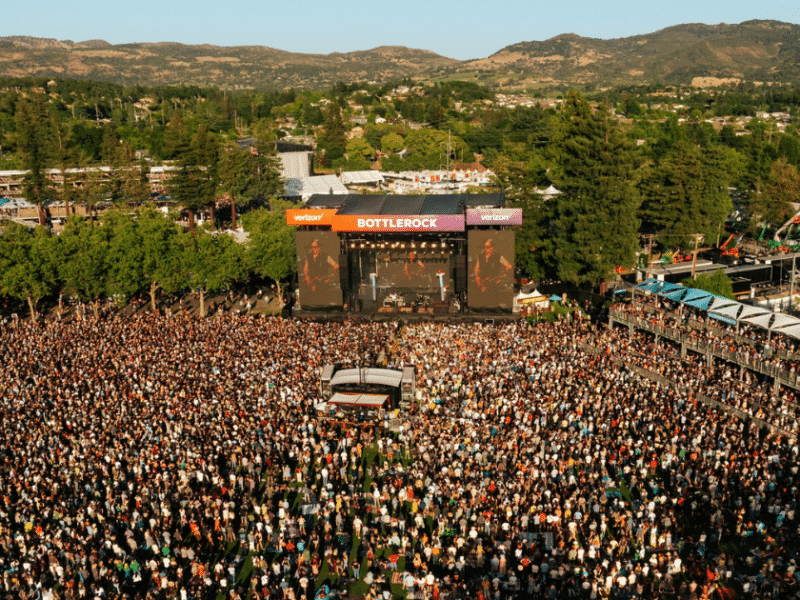
Signature gatherers for Measure M, many of them American Canyon residents, were paid $40 per signee. Thousands of names were collected in only a month — partly thanks to a series of open houses at the Ruins hosted by McGrath that included free tacos and tours of the venue, which has become an EDM destination.
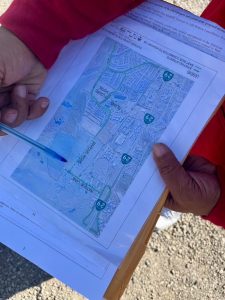
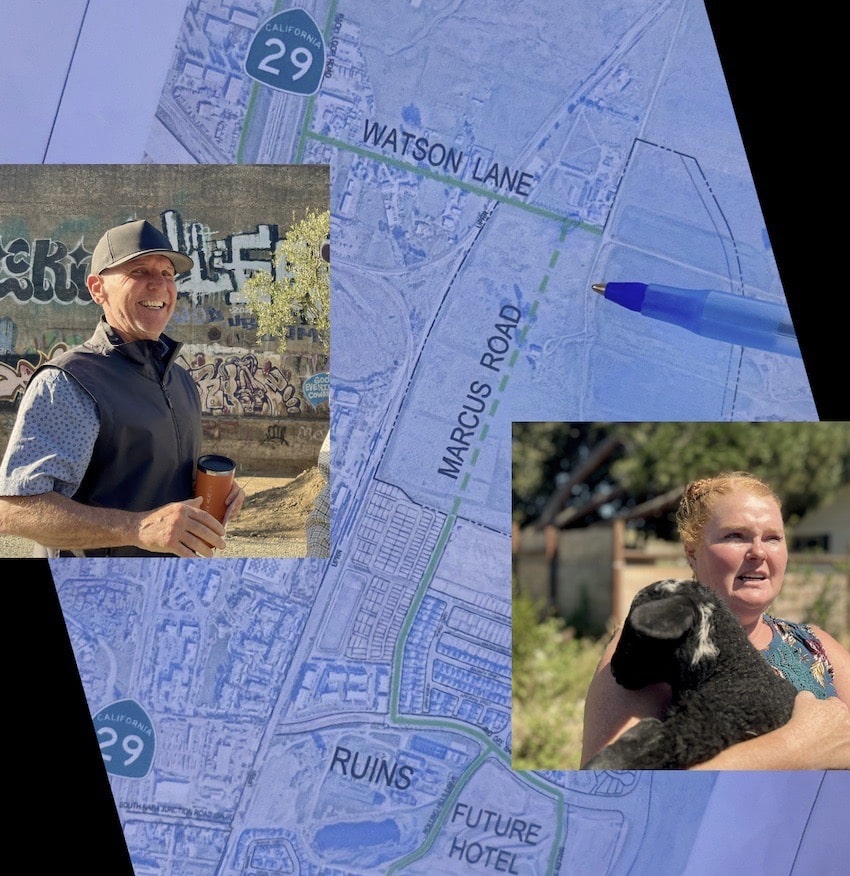
The proposed extension would connect the highway to Marcus Road by way of Watson Lane, a narrow path in an unincorporated area just outside city limits, where some 12 families currently live in a rural setting, some with farm animals and barns — many for several generations.
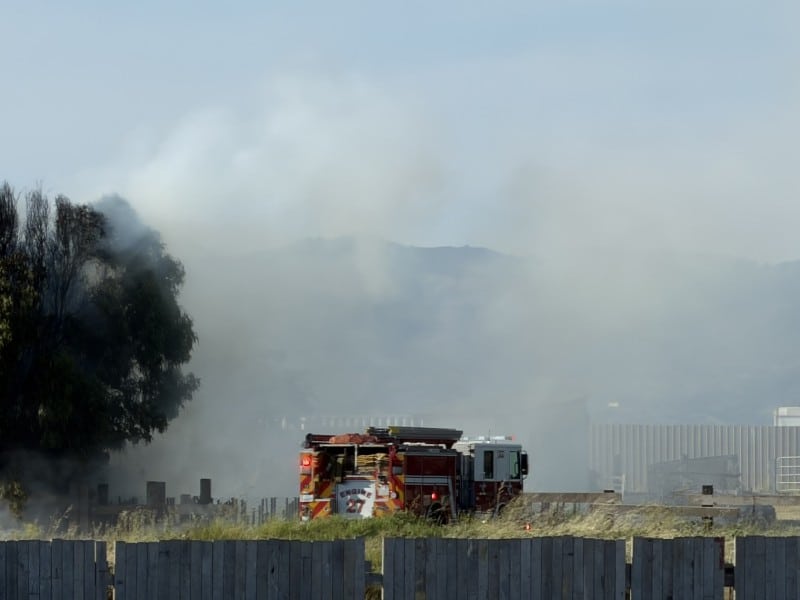
Offloading traffic from Highway 29 is a popular idea. A rush hour commute down the 1.5-mile stretch of road through American Canyon can take up to 30 minutes. Supporters argue that, along with easing traffic, the connection will create a crucial fire route for the northernmost section of Watson Ranch, where hundreds of families have just one way out.
But Watson Lane residents say they’ve been left out of the equation. Should Measure M pass, a minimum of 15 feet would be cut from properties on each side of Watson Lane to widen it, accommodating more traffic. Eventually, the sleepy side street could become a major thoroughfare, disrupting lives that have dodged development for decades.
If paperwork is in order and the required 1,436 signatures are verified, Measure M moves on to a vote by American Canyon’s City Council by summer. If the council doesn’t unanimously approve the measure, it will show up on the November 2026 or March 2027 ballot.
The measure, which does not specify who would pay to extend Marcus Road to Watson Lane, could pass with 50% of the vote.
Marcus Salinas, a signature gatherer who lives just a few streets away, pounded the pavement on behalf of the measure. He’s getting married at the Ruins in October.
“It’s a diamond in the rough,” he said, adding that opponents are just afraid of progress. “Change happens,” Salinas said.
Rural life on Watson Lane
The latest developments have stirred strong concerns among Watson Lane residents, where families have lived along the two-lane road for generations.
“They were saying, ‘Well, you’re anti-progress,’” said Jessica Sanders, a third-generation Watson Lane resident, describing one of the events at the Ruins she attended. Sanders, who raises goats, sheep and cattle on 5 acres, refused to sign the petition, despite being asked by multiple signature gatherers at the event.

“If you only define progress by how many houses you put in, how many sidewalks you put in, how much infrastructure you put in,” said Sanders, “What is that without quality of life? If there is no quality of life, then is that progress?”
She and others noted the train regularly crosses the narrow Watson Lane, often blocking traffic. “When people start using it and they start getting stuck by the train, or stuck on [Paoli Loop], then they’re going to be like, ‘Oh, this wasn’t really well thought out.’
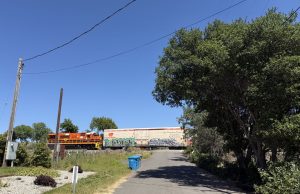
“So many alterations would need to be made,” said Sanders, questioning why Watsons Ranch’s infrastructure was not in place before the development began. ”Essentially, they’re telling a bunch of people: Dive in the pool. There’s no water in it. But dive in the pool, and by the time you hit bottom, we’ll have water in it.”
She and neighbors are determined to fight back. Across the street, the Lawson family has strongly questioned how the road could manage the anticipated surge in traffic.
“Watson Lane would not work,” said Ladeene Ford, a Dixon resident whose mother, Earlene Lawson, continues to live on Watson Lane. Her late father, Leslie Lawson, strongly opposed the idea.
What about Newell Extension?
For years, city officials have planned an alternative route connecting Highway 29 to Newell Road on the highway’s east side, a plan referred to as Newell Extension. The city would annex two areas totaling about 360 acres north of the city, in part to extend Newell Drive to Green Island Road and South Kelly Road in an effort to ease traffic congestion on Highway 29.
McGrath, who has sued the city over a number of issues, including road access, has said he cannot wait years for the long-planned Newell Drive extension to be built. The city’s plan extends Newell Drive to South Kelly Road, and could take 10 years to build.
Extending Marcus Road to Watson Lane could be done in two years, McGrath has said publicly.
Mayor Pierre Washington told the Current that he does not expect to have the City Council adopt the initiative, if enough valid signatures are collected. “My belief is that a matter of this significance should ultimately be decided by the voters of American Canyon,” said Washington, who declined to sign the petition.
City Councilman David Oro said he signed the petition as a “private citizen.” According to McGrath, Oro is the only city official to have openly supported the measure. Oro previously worked on the development for McGrath.
“My reasoning is straightforward,” said Oro. “The entire east side of town — roughly 10,000 residents — currently has only two access points to Highway 29, American Canyon Road and Donaldson Way. From a traffic flow and emergency access standpoint, that’s simply not enough.”

Building the Newell extension could take years and cost millions of dollars, Oro said. “Watson Lane, in my view, represents a common-sense interim solution. It is not a private road. It is a public roadway with a public rail crossing that taxpayers have already funded.”
The Ruins
At one of McGrath’s open houses at the Ruins on a hot May afternoon, guests were greeted at the entrance by enthusiastic signature gatherers and tickets for tacos from Tacon Hambre.
About 1,200 residents came to all the events. “That was fabulous,” McGrath said.
McGrath introduced himself to each group, pitching an exciting vision for Marcus Road and the future of Watson Ranch. All afternoon, he rattled off a list of ideas for the Ruins: yoga classes, a beer garden, a World Cup viewing party, American Canyon High School prom.
Karina Servente, a signature gatherer for Measure M, said McGrath is the only developer she knows who regularly chats with residents and donates to local causes. As an active fundraiser for youth, she would know.
“It takes time to talk to the community,” she said. “Terry has never said no to any PTO, PTA or other organization in town. What other developers are out here like this?”