New soil, old stories, and the people who brought us here
There is something interesting about growing up in a city that is just as old as you are. American Canyon became a city in January of 1992, the same year my parents bought their very first home together in a neighborhood surrounded by rolling hills, open space and potential. I was born a year later, surrounded by love, a wide-open future and possibilities.
In movies and TV shows, it’s common to see a family that has lived in one city for multiple generations. They walk around and wave at people they’ve known for years, calling them by name and chatting for a few minutes on their daily route. As the plot goes on, the parents or grandparents point out spots around town, telling stories about the significance of each location.
“That’s where your grandpa taught me how to ride a bike for the first time.”
“Right over there is where your auntie and I used to race down the slide.”
“See that spot right across the street? That’s where I first met your mom.”
As a first-generation Filipino American and one of the first generation of children to be raised in American Canyon, I didn’t experience moments like this. My parents were just as new to this town as I was. Instead, they told me stories about life on the faraway islands where my family came from.
On rainy days, my parents would drive me to school and tell me how they used to walk through floods, monsoons and storms so they wouldn’t fall behind in class. When I played games with my friends, my mother would tell me about the time she hid in a jeepney — a colorful public transport vehicle in the Philippines — during hide-and-seek, only for it to drive away. When I started taking tennis lessons on the Melvin courts, my dad would regale me with stories about playing matches on dirt. Before anyone showered, my Lolo (grandfather) would tell me how, in the Philippines, they used to step out into the warm rain because they didn’t have running water.
At the market, I’d hear how my mom got in a heap of trouble as a child when she was sent to buy fish for dinner, but they slid out of the newspaper as she obliviously skipped home. Going door to door in Canyon Creek on Halloween, I’d be told how precious one piece of candy was to a child in the Philippines. And when Christmas lights started going up on our street, I’d learn how the holiday season begins in September “back home,” and how the festive spirit is unlike any other.
Sure, I wouldn’t get to step foot on the same tennis courts where my father once played, but I put the passion and fun-loving spirit he carried on those Philippine courts into every swing of my racquet. We get a bucket of candy every Halloween here, but it tastes all the sweeter when I share Kit Kats with my mom, who used to take one bite a day just to make her candy last longer.
In time, our family met people in our community through school and work, and our roots grew. Suddenly, we were the ones calling out names and waving to others on walks. Before long, people were coming up to me saying they’d run into my dad walking our fluffy white dog around the neighborhood.
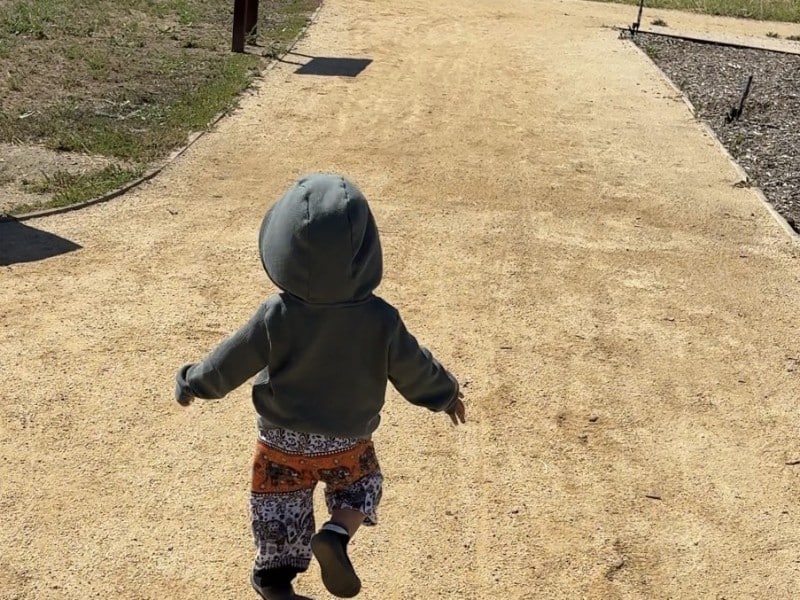
Now, on rainy days, I hear my grandfather’s jolly voice in my head and find myself telling my baby boy stories about how a rain shower in the Philippines means something very different than it does here.
As I point out spots to my son and tell my own stories, I pass along those of the generations before us as well. My ancestors’ stories may not live in the soil our feet now walk upon, but I carry those stories, that legacy, and that gratitude with me wherever I go.